
 FUL1
FUL1 MAN1
MAN1 BOU0
BOU0 LIV1
LIV1 LEE0
LEE0 CRY0
CRY0 MNC5
MNC5 SUN3
SUN3 NFO0
NFO0 COV1
COV1 BHA3
BHA3 ARS0
ARS0 EVE1
EVE1 IPS0
IPS0 NEW2
NEW2 HUL1
HUL1 TOT2
TOT2 AVL3
AVL3 NOR3
NOR3 BOL4
BOL4 WOL1
WOL1 WBA0
WBA0 BIR2
BIR2 MID2
MID2 BUR1
BUR1 DER1
DER1 LCN1
LCN1 SWA2
SWA2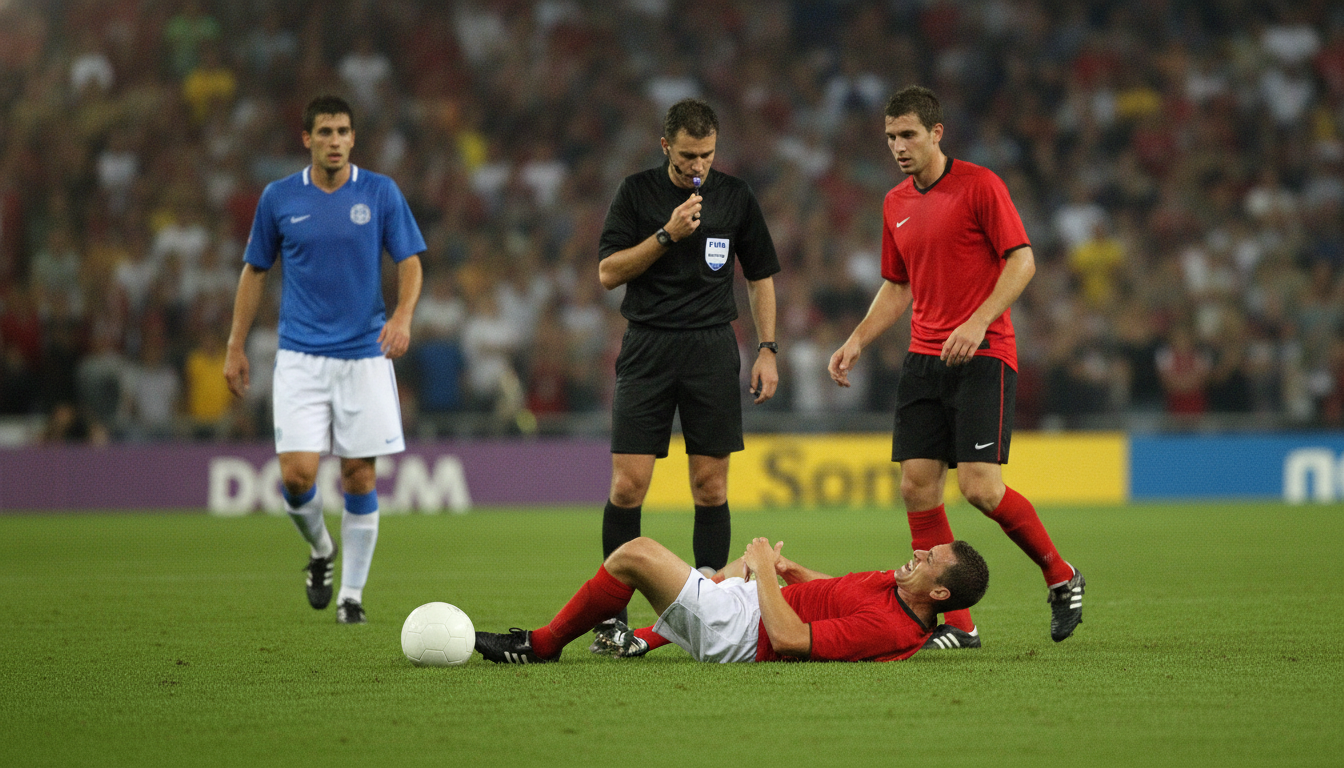
Why do footballers fake injuries?
Why do footballers fake injuries?
A player goes down clutching his face after the faintest brush of a shoulder. The referee stops play. His teammates catch their breath. None of it was real — and all of it was deliberate.

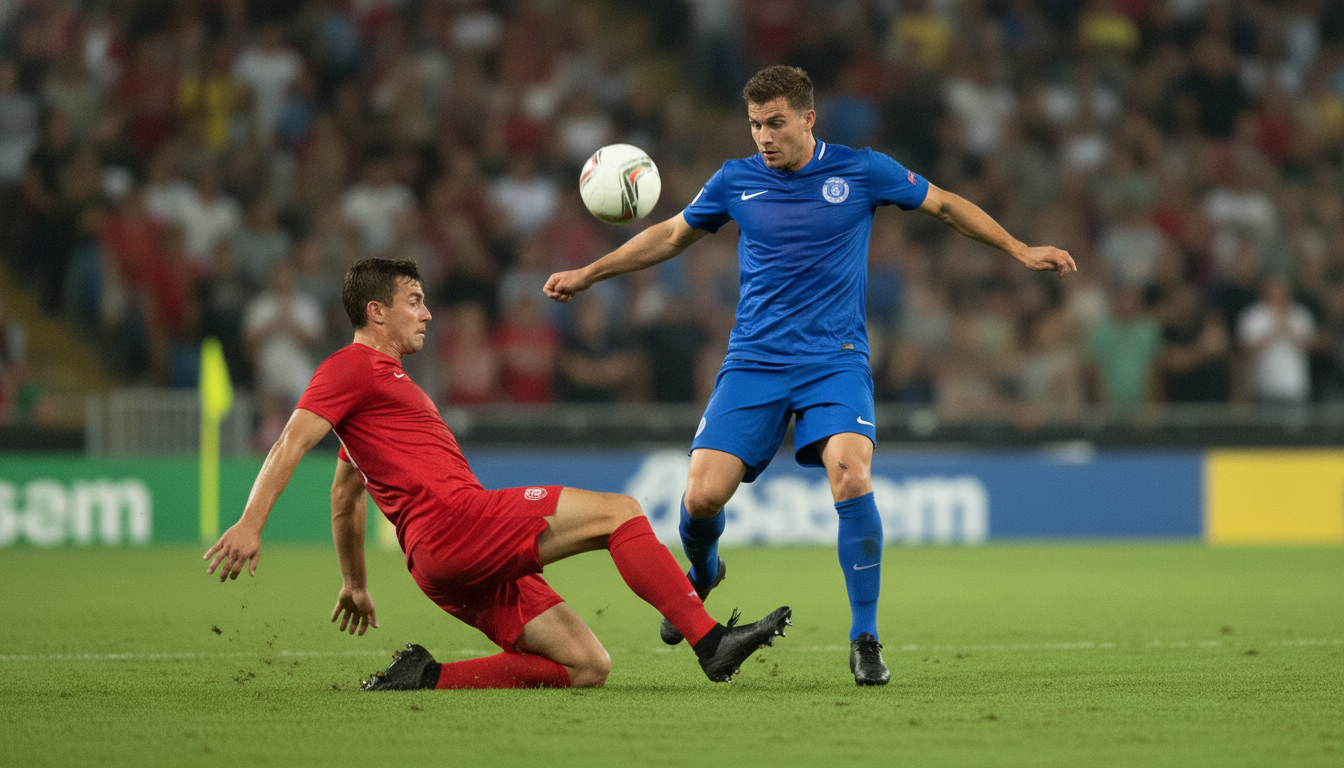
A forward receives the ball on the edge of the box, feels a defender's hand on his back, and throws himself to the ground. He stays there, rolling, hands over his ankle. The referee blows his whistle and points to the spot. That is the version most people picture — the dive for a penalty — but it is only one reason a player might go down without being genuinely hurt.
The most common motive is to win a free kick or penalty. If a player can convince the referee that a foul has been committed, his team gets possession in a dangerous position, or a chance to score from twelve yards. The calculation is simple: the potential reward is large, and the contact is often real enough to make the reaction look plausible.
A second motive is to get an opponent into trouble. A player who already has a yellow card is one booking away from being sent off. If an attacker can make a routine challenge look reckless — throwing his head back, clutching his face — the referee may reach for a second yellow. Suddenly the opposition is playing with ten men for the rest of the match. That changes everything.
Then there is time-wasting. A team protecting a one-goal lead in the final ten minutes has every incentive to slow the game down. A player goes down, stays down, and the physios jog on. The clock keeps running. By the time he is back on his feet, another thirty or forty seconds have gone. Done repeatedly across the closing stages of a match, it adds up.
Less obvious is the use of a fake injury to disrupt the other team's rhythm. If the opposition is pressing high and moving the ball quickly, a stoppage — even a brief one — forces them to reset. Defenders get back into shape. The goalkeeper organises his line. The momentum that was building simply stops. A player going down at the right moment can be as useful to his team as a good tackle.
Referees know all of this. They are looking for it. But distinguishing a genuine reaction to contact from a manufactured one is harder than it looks from the stands. Players are moving fast, collisions happen in fractions of a second, and even a light touch can cause a stumble that looks dramatic. That genuine difficulty is part of why the habit persists — the referee cannot always be sure, and players know it.
The risk is a booking for simulation. Most players judge that risk worth taking when the stakes are high enough, which is why you see it more often in tight matches, late in games, or when a penalty could be the difference between winning and drawing. The cynicism is real, but so is the logic behind it.
The day's football, in your inbox at 7 AM. Nothing else.
Pick of the night's matches, what the transfer window's doing, and the one column you should read today. No ads. No tips. No operators.
One-click unsubscribe. We do not share emails.
Comments
Loading comments…